
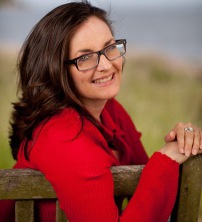
 Melissa L. White
Screenwriter, Filmmaker, Author
Melissa L. White
Screenwriter, Filmmaker, Author
Somewhere, Something Wonderful...
The night before Masie Greene’s final exam in her Business Writing 401 class, she baked two dozen chocolate-chip cookies for Paul, her neighbor across the hall. They shared several classes together at Northwestern University, as both were pre-law majors. She took him the cookies, and he invited her in so they could study for their final.
After they’d studied together for an hour, one of Paul’s fraternity brothers, Kris Romo, dropped by to study with them too. Paul introduced Masie, making her blush. “She’s the kindest, sweetest person I’ve ever met. Not your typical type-A personality, wannabe attorney.”
Embarrassed, she offered Kris a cookie from the plate on the table.
“Thank you.” Kris grabbed a cookie, eating with gusto. “I didn’t have time to eat today. These are delicious.”
“I just happen to have some left. I’ll run home and get them. Be right back.”
Masie dashed back home across the hall, grabbed the last of the remaining cookies, wrapped in foil on her grandmother’s willow plate, and she took it back to Kris.
“Wow, thanks.” Kris lifted the foil and sampled another cookie. “They’re still warm! You’re not only an excellent baker, but you’ve outlined the entire study guide. Would you mind if I copy your notes?”
She obliged, and he photographed her notes with his phone. All twenty-two pages.
At midnight, Masie decided she’d studied enough, and she went home.
***
The next day, they all did well on their final. Later, when Masie saw Paul in the hallway outside her apartment, he mentioned that Kris had asked for her phone number. “I didn’t give it to him.”
“Why not?” she asked, mildly curious.
“I wasn’t sure if you’d want me to. I told him that if he wanted to see you again, I’d give you his number. That way you can call him if you feel like it.”
Masie laughed. “He seems nice, but I’m leaving for grad school soon. There’s really no point in taking his number. Thanks anyways.”
Two weeks later, on the morning of Northwestern’s 2023 commencement ceremony, Masie’s car wouldn’t start. Everyone else in her building had already left for the graduation. With only fifteen minutes to get to campus and find her place in line to walk in the procession, she quickly grabbed her cap and gown from her car then arranged for a ride with Uber.
While Masie waited at the curb, Kris drove past her apartment, on his way to the graduation ceremony. She waved, and he pulled over immediately.
She ran to his truck as he rolled down the window. “Hey, Kris. My car won’t start. Are you headed to campus for the commencement?”
“Yeah, hop in. I’ll give you a lift.”
“Thanks!” She climbed in the cab, then canceled her Uber request.
Kris reached beneath the seat and grabbed a canvas Trader Joe’s tote bag. “Here’s your plate. Been meaning to return it. And just like that, here you are in the middle of the street.”
She laughed, took the plate, and held it in her lap with her graduation cap. They chatted as they drove toward campus, then Kris turned to her, suddenly serious.
“I really wanted to see you again after studying for the final. All semester we’ve been in the same class, and our paths never crossed until the next-to-last day of our senior year.” He glanced at her as he downshifted, pulling into the parking lot.
Kris parked in an open spot near the exit, then turned to Masie. “You know, my uncle is a mechanic. He can tow your car to his shop this afternoon and give you an estimate right away. I can even get you a friends-and-family discount.”
Masie grinned. “Thanks a bunch, Kris.”
“Don’t mention it.”
“Funny how the universe sends us exactly what we need, right when we need it.”
Kris laughed. “Maybe so. I truly believe if I hadn’t photographed your notes, I would not have made an A on that final. You saved me. So, I owe you.”
“Thanks.” Masie needed her car to make it through her summer intern gig with that immigration law firm in Chicago. She remembered her mom’s warning not to use public transportation in Chicago because it’s “far too dangerous to ride the bus in a big city.” After that, she needed her car to get her all the way to Cambridge, so she could start Harvard Law School in the fall. She absolutely needed this car. But without any money to speak of, and her summer job only an unpaid internship, she had no idea how she’d pay for the car repairs. She squeezed her eyes shut and prayed silently for help paying for her car repairs. She opened her eyes and smiled at Kris. “What I need is a small miracle.”
He laughed. “One miracle, coming right up.” He took out his phone. “Hey, Siri, call Uncle Matt.”
Masie folded her hands over her grandmother’s plate in her lap while Kris made
arrangements with his uncle to tow her car later that afternoon.
While at commencement, she sat listening to several speeches, all the while thinking back over her time as an undergraduate, remembering what she’d learned. But it was the commencement ceremony itself that made more of an impression than all four years of her undergraduate studies, obtaining her pre-law degrees— concurrent BAs in political science and business administration.
And the reason for the profoundly positive effect of this commencement ceremony was the speaker, Governor J. B. Pritzker. His speech began with a question: “What is the best way to spot an idiot?”
Then it continued….
“The best way to spot an idiot? Look for the person who is cruel.
Let me explain.”
“When we see someone who doesn’t look like us, or sound like us, or act like us, or love like us, or live like us, the first thought that crosses almost everyone’s brain is rooted in either fear or judgment or both. That’s evolution. We survived as a species by being suspicious of things that we aren’t familiar with.
“In order to be kind, we have to shut down that animal instinct and force our brain to travel a different pathway. Empathy and compassion are evolved states of being. They require the mental capacity to step past our most primal urges. This may be a surprising assessment because somewhere along the way in the last few years, our society has come to believe that weaponized cruelty is part of some well-thought-out master plan. Cruelty is seen by some as an adroit cudgel to gain power. Empathy and kindness are considered weak.
“Many important people look at the vulnerable only as rungs on the ladder to the top. I’m here to tell you that when someone’s path through this world is marked with acts of cruelty, they have failed the first test of an advanced society. They never forced their animal brain to evolve past its first instinct. They never forged new mental pathways to overcome their own instinctual fears.
“And so, their thinking and problem solving will lack the imagination and creativity that the kindest people have in spades.
“Over my many years in politics and business, I have found one thing to be true, the kindest person in the room is often the smartest.”1
Masie had always practiced kindness, and her grandmother had taught her at a very young age to believe in the power of the universe to send you exactly what you need, right when you needed it. Grandma Kate always used to say, “Expect a miracle and ask for what you want. Because you may just get what you asked for.”
The following afternoon when Kris’s Uncle Matt called, she literally felt the soul-crushing weight on her chest of not having nearly enough money to pay for everything she needed just to get by. He wanted $3,500.00 to replace the catalytic converter. She hung up the phone and started crying, then immediately she thought of Grandma Kate and decided not to settle for this estimate as her only option. She wrote the following affirmation in her journal: “I will get my car repaired for less than $200.” She had exactly $200 in her savings, and that was all she could afford.
So, she called the dealership where she bought the car and asked to speak to the service manager. “My name’s Masie Greene and my car won’t start. I think it’s the catalytic converter.”
“Yes, Miss Greene. I see here your 2019 Civic Sedan is no longer under warranty.”
Masie took a deep breath, trying to remain calm. “I’m looking at my receipt. There’s two months left on my extended four-year warranty.”
“That’s not what it says in my database.”
“Your information is incorrect. I’ve got my receipt. And my extended warranty contract.”
A sustained silence followed.
“Are you there?” she asked.
“I wish I could help you, but my file indicates your warranty expired last week.”
Masie felt her heart sink. “You know that’s not true.”
“My hands are tied. There’s nothing I can do.”
“We’ll see about that. I’ll bring you the receipt in person.” She hung up the phone, angry that auto repairs with a dealership invariably involved dealing with people trained to deny coverage whenever possible. She grabbed her paperwork, stuffed it in her backpack, and took her ten-speed down from the bike hook in the living room.
She rode her bike to the Honda dealership, and armed with her receipt, and her unshakeable sense of righteous justice, she entered the Service Department and asked to speak with the manager. Within minutes, she’d confronted him, showed him the receipts, and warned that if he failed to honor those legally binding documents, she would take him to court.
“Okay then. We’ll repair your car. Give me the address where it is, so I can tow it here. We can have it done in one day.”
Masie thanked him and laughed out loud. You’re so right, Grandma Kate! The universe gives you exactly what you need right when you need it.
Elated, Masie hurried outside, got on her bike, and headed out. She felt invigorated; like the universe was her powerful, personal ally—ready to assist her in any obstacles that may arise. Then just as she pulled out of the Service Department driveway, an older man in a Tesla came zipping into of the Service Department parking lot and almost hit her. She slammed on her brakes, then took a spill on her bike. The Tesla driver screeched to a stop, jumped out of his car, and helped Masie up. They assessed the damage together. Her front wheel was badly bent, with several broken spokes. The Tesla driver introduced himself as Judge Sherman Kessler, a federal judge in the US Court of Appeals for the Seventh Circuit, headquartered in Chicago. He’d come to visit his sister in Evanston, to help get her car repaired. Hence his unexpected detour to the car dealership.
“I’m okay. No harm done.” Masie tried to pass it off as no big deal.
But Judge Kessler wouldn’t hear of it— he insisted on taking her to the bike shop. On the way there, he asked her if she was from Evanston.
“I’m from a small town in Texas. I just graduated from Northwestern with my pre-law degrees, and I’m headed to Harvard Law School in the fall.” She explained that her senior thesis had helped her win a full-ride academic scholarship to Harvard.
“Harvard Law School doesn’t offer full-ride scholarships.” Judge Kessler glanced sideways at her, as if suspicious of her story now.
“The scholarship is from the Baines-Williams Foundation. They offer full scholarships for students with disabilities. I was diagnosed with bipolar disorder when I was in high school, right after my father died.”
Judge Kessler gripped the wheel. “I’m sorry, Masie. That must’ve been difficult.”
“It was, but I’ve found that I can compensate for this disability by pouring all my energy into my studies. My thesis received an A+ grade and helped me win the scholarship.”
“It sounds like an impressive thesis. What’s it about?”
“It was a business plan for an online non-profit that assists underprivileged women in states with abortion bans to obtain a pregnancy test using a urine sample deposited at any of the USA’s two thousand-plus Quest Health Labs. It then provides these patients with reproductive healthcare using remote video appointments with a gynecologist in California, who can read the digitally delivered Quest Lab results, and then prescribe abortion pills to patients anywhere in the USA without breaking any laws of states with full abortion bans, as no services are provided by those states’ doctors or pharmacists. It’s safe, affordable, and it’s completely legal.”
“That’s a pretty thought-provoking thesis. Why don’t you come by my office in downtown Chicago next week, and we’ll see if I have any openings for a paid internship.”
And just like that, her car breaking down led her to a possible “dream job” and a powerful ally in the Seventh Circuit, Court of Appeals. Masie smiled at Judge Kessler, pleased as she could be that Grandma Kate’s advice to always expect a miracle had somehow helped the universe connect her with him. “I’d be happy to work for you, if possible. Thank you.”
And besides, she told herself with confidence, who knows where this internship will lead? I just may make some friends in high places.
This was the mindset that Masie took with her, after hearing Governor Pritzker’s speech on how kindness and compassion were actually “evolved states of being.” This is how she segued from her undergrad career to her first foray into the US court system. She knew full well that some people worked hard their entire lives and never seemed to get ahead. So, she saw this fortuitous pathway opening up for her as a sign that Grandma Kate was right. And so was Governor Pritzker. She told herself to always expect a miracle, and to always be kind and compassionate.
***
The following week, Masie started clerking for Judge Kessler. She felt sure she was on the right path now. Not only that, attending law school had been her own dream since junior high school, when a corporate attorney had visited her civics class on career day, and talked about how becoming an attorney was one of the most respected professions available to women. Then that very same day after school, Masie had turned on the TV to watch Sesame Street with her younger brother, and Justice Sonia Sotomayor appeared as the guest on the “Word on the Street” segment. Masie had dreamed of becoming an attorney from that very moment. As if the universe had colluded to steer her to Sesame Street and Justice Sotomayor’s appearance on the same day as the attorney’s visit for career day. Becoming a lawyer seemed like the inevitable career path for Masie, and law school became her long-term goal. She worked hard on her GPA, becoming her class salutatorian, missing the top spot by only a quarter point.
She left for Harvard at the end of the summer, with an impressive arsenal of professional and personal contacts she’d forged while working for Judge Kessler. She felt proud of herself for sticking with her game plan and following her dream.
***
During her first semester at law school, Masie fell in love with Harvard. The tradition. The history. The superior scholastic pedigree she found herself working toward. She even finagled her way into getting hired by the Harvard Law Review as a first year law student. She accomplished this feat by letting her simple manner of being kind yet confident lead her in all her endeavors. She answered an ad in the Review for an editorial assistant and included her thesis paper as her writing sample, outlining her plan to help disadvantaged women in states with abortion bans. Selma, the managing editor, loved her paper and hired Masie on the spot.
She worked at the Review for six weeks, until another first-year law student, also recently hired as an editorial assistant, accused her of falsifying her employment history on her application. Masie had mistakenly entered her start date at Judge Kessler’s office as June 16, 2022, when it was actually June 16, 2023. Masie had made an honest mistake. But her accuser was jealous of Masie’s achievements. He wanted to be the top editorial assistant, and his experience in life led him to believe that using underhanded tactics to get ahead was an acceptable plan. Nothing Masie said or offered in her defense could help save her job.
She felt her heart pounding as tears rimmed her eyes. “I wasn’t trying to lie about my employment history. My resume had the correct start date.”
“I’m sorry,” replied Selma. “But your application is an official Harvard document. We cannot knowingly employ anyone who made false statements on their application. We could face severe legal consequences. My hands are tied.”
Unable to hold in her emotions, Masie started sobbing. She knew it was her bi-polar disorder, rearing its ugly head. But she couldn’t help it. She blurted out, “Can’t you give me one more chance? I’ll never make another mistake…”
Selma simply opened the door and held it open, waiting for Masie to leave. “You are over-reacting. Proving my judgement in this matter is sound. Your crying isn’t going to change anything. Perhaps you’ll be more careful on future job applications.”
Masie left the offices of the Harvard Law Review and started running across campus. She ran all the way back to her dorm room. And by the time she crawled into bed, she was no longer angry with her over-zealous accuser for pointing out her mistake. Instead, she now felt strengthened with the resolve to never make that same mistake again. Ever. Don’t be in such a hurry to achieve the goal that you lose sight of the details along the way. She repeated this thought in her head, as she hurried across campus to class the next morning. At least now she had more time to study.
She thought of the long and winding path she’d embarked on to get here. Her father’s advice just prior to his early death. Her struggles with bipolar disorder, then her triumph over this disability by winning her scholarship for law school. So many twists and turns. Like the Beatles 1970 hit, “The Long and Winding Road.” She loved this song and often played it on infinite repeat on her cellphone playlist while jogging on campus every morning. It became her theme song. Her personal blueprint for serendipitous success.
(End 0f Excerpt)
***
 Print
Print